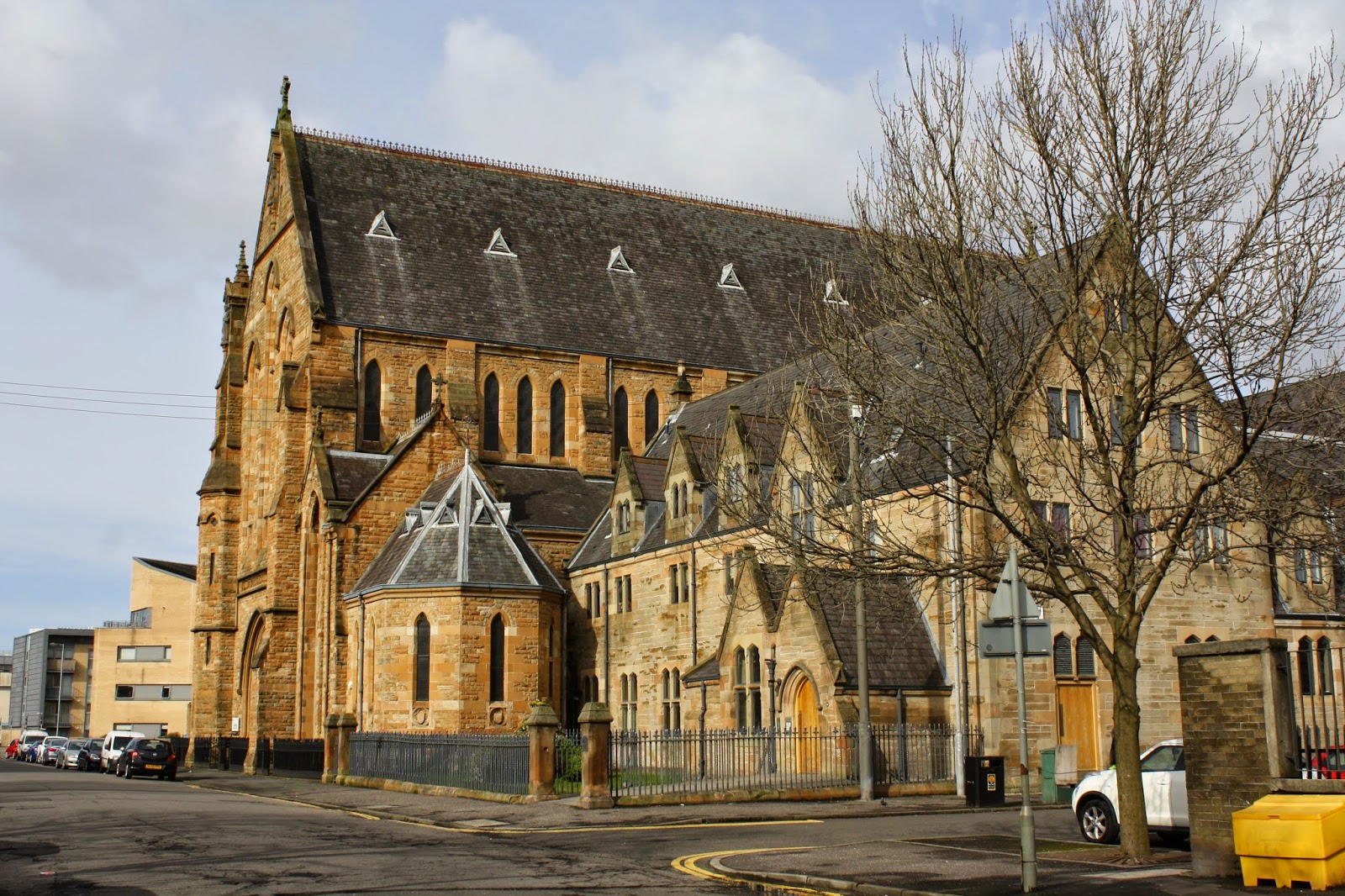
Saint Etienne, Glasgow Film Theatre. Young Fathers, Glasgow School of Art. Belle and Sebastian, SSE Hydro
Rather spoiled for choice for live music in Glasgow this week. Here are a couple of brief live gig reviews of some of the bands that I took in.
It is a real treat to see Saint Etienne and Belle and Sebastian play within a few days of each other, two standards on any playlist I would put together in my student days. Both bands demonstrate their "indie" credentials by being named respectively after a French football team and a French children's book of the 1960s. Between these two gigs I also this week got the chance to see the excellent Young Fathers again, who seemed like a sharp, refreshing double espresso between two sweet cups of cappuccino.
Saint Etienne
I have always kept an eye out for Saint-Étienne the French Ligue 1 football team ever since they played a European Cup Final in Glasgow in 1976. I was only a wee thing, but my parents put me up to speaking to some of the 25,000 French fans in town, chanting "Allez Les Verts!" to them. Despite my support, Bayern Munich (and Hampden's square goalposts) beat them 1-0 that day. When a band of that name emerged in the 1990s I was drawn to them by the name, and stuck around to listen to their groovy, indie-dance sound. They were in Glasgow to perform live the soundtrack to the film "How We Used To Live", a documentary edited together by one time band member Paul Kelly, largely from BFI archive footage. (If you want to gaze through the archive yourself you can do so along at Bridgeton Olympia Library in Glasgow.)
There is a lot more interest in the nostalgia days before every aspect of our lives was recorded and shared with the world, but I found the film itself a bit sentimental. It recalled London from the 1950s to the early 1980s with Ian McShane's jocular narration. There were interesting wee nuggets, a well dressed woman tottering in high heels through a demolition site, steam trains being dismantled during the Beeching cuts, but the music and pictures were creating an atmosphere, rather than telling a story. It all felt a bit clean and wholesome. I think we've just been spoiled a bit with King Creosote doing a similar thing alongside Virginia Heath with their film From Scotland With Love. That film, made from Scottish film archives, seems to much more successfully capture real people and real places, with no cod narrator, but the music providing a strong element of storytelling.
Saint Etienne at Glasgow Film Theatre
This was followed by the band, fronted by Sarah Cracknell playing a fair few from their back catalogue. Great though their tunes are, it was funny to hear songs that I used to dance along to in Level 8, whilst sitting in a comfy seat in a cinema watching the band play on the carpeted area below us. It was a bit too much for one or two middle aged male groupies who squealed nonsensically at Sarah Cracknell, who didn't have the height a stage would usually give to allow her to be kept away from them. I cringed on her behalf as she politely tolerated it. Their tunes have stood the test of time however and were great to see performed.
Young Fathers
Edinburgh's finest pop/rock/hip hop act, Young Fathers arrived back on these shores again after a recent tour in the USA. Their latest album, White Men Are Black Men Too, is a fantastic listen, but seen live they take it up a notch. The surprise, but deserved winners of the Mercury Music prize last year their music is as hard to categorise as they are. A mish-mash of influences is what you should expect from a band consisting from a boy Drylaw, a Liberian who arrived in Edinburgh via Ghana and a Edinburgh-born son of Nigerian parents. Their "Young Fathers" moniker apparently comes from the fact that they all share their father's first name, a clever play on words that their songs enjoy too. They are angry, sweaty and have got something worth listening to. Driven on by their energetic drummer they barely pause for breath. I think this is the third time that I've seen them live, and in the sold out hall at the Art School in Glasgow they now seem to have a following that knows their music, and wants to singalong. They battered through a slick, well rehearsed set, dropped the mic to the stage, then walked off. No chit chat, no laughs, it's all about the music.
Young Fathers on stage in Glasgow
Belle and Sebastian
By contrast to Young Fathers, Belle and Sebastian have never been about the energy levels, but more about the feeling of a shy friend talking about his life from his bedroom. The first time that I saw them live was in 1998 when they played in Maryhill Community Central Halls, a kind of warm up gig for a tour I think. It was an easy crowd, with their most adoring fans sat cross legged on the floor near the stage, and their aunties and uncles nearer the back of the hall. At that gig, occasionally they'd stop when one of the band made a mistake, they'd all apologise to each other politely and decide what song to play instead.
Next time I saw them was a few years later when they played the Barrowlands, a venue that suited them down to the ground, packed out with adoring fans. The intimacy of their music worked well in that space, with local couthiness supplied by Gavin Mitchell coming onstage to do his Boaby the barman routine from Still Game.
Now on the home leg of their current tour they are playing the 10,000 seater SSE Hydro on a Friday night, accompanied by the Scottish Festival Orchestra. Their current album, Girls In Peacetime Want To Dance, takes them in a different direction, as if they have been listening to a lot of Pet Shop Boys music recently, hinting at a grander sound and performance. Like Saint Etienne, we start off with a nostalgic film as the hall is beginning to fill. The film, Glasgow 1980, is worth watching if you've never seen it. It was commissioned by Glasgow Corporation in 1971 like a propaganda film, looking forward to the brave new world ahead once all the slum tenements were cleared and we were all living in clean, airy tower blocks and getting about on motorways. It is directed by renowned photographer Oscar Mazaroli and produced by Bill Forsyth and can be watched on the Scottish Screen Archive website.
Belle and Sebastian at the SSE Hydro, Glasgow
The Hydro is a massive space which the band and their orchestra tried to fill with bombast, flashy video screens and enthusiasm. It was good to see Mick Cooke back with the band, as one thing that I missed on the current album was his brass playing. He seemed to have come back to help with the musical arraignments with the orchestra. They played surprisingly few songs from the new album, sticking to reliable old favourites. Sadly no room on the setlist for my own favourites (Fox in the Snow and The Stars of Track and Field) but The Boy With the Arab Strap was accompanied by audience and orchestra members invited onstage to dance. I really enjoyed the concert, sat with a smile on my face the whole way through, but 100-times over would have preferred to see them back in the Barrowlands. The vast standing area seemed to be filled with many people just standing, so I don't know what the sound or atmosphere down there was like, but it looked a bit flatter than you may have hoped. The best moments tended to be when you got some intimacy with the band, talking about writing Dear Catastrophe Waitress in the old Grosvenor Cafe, or another song on the number 44 bus (which used to take me home to Knightswood from the city centre - a bus route that seemed to attract eccentric passengers such as the woman who would sit her tortoise on her shoulder "as it likes to look out the window").
It was a great concert, they have a fantastic back catalogue of songs, but I am not sure they really should try to be a stadium rock band.
My family's tenuous links to football in Kilmarnock
Partick Thistle play Kilmarnock this weekend, with the pleasant situation being that Thistle are safe in the Scottish Premiership for another year, but Kilmarnock still need to keep an eye on other results for their own safety. I've taken this as an excuse to investigate my family football connections in Ayrshire, which includes a few Juniors teams and one Scottish Cup winner's medal.
I like Ayrshire football teams. They just seem like genuine, long standing, integral parts of their local communities. I grew up in Maryhill supporting Partick Thistle. This means that over the years my team has often been found jockeying for league position with Ayr United or Kilmarnock and a short trip to Somerset Park or Rugby Park is always one that I enjoy. However, in terms of success, the Ayrshire Junior Football teams often eclipse their senior neighbours.
As children, my brother and me were sometimes taken to see Maryhill Juniors play at Lochburn Park, or Yoker Athletic down at Holm Park. In fact I think Lochburn Park is the only Scottish ground I've been threatened with being kicked out. As bored 7 and 9 years olds we were scolded by someone at the club for kicking lumps of harling off of a wall that was distracting us during a less than scintillating game. However, the real blood and thunder of Junior Football is best captured by a roll call of Ayrshire football clubs. Auchinleck Talbot, Hurlford United, Maybole Juniors, Irvine Meadow, Glenafton Athletic, Beith Juniors, Cumnock Juniors and Irvine Victoria.
My great-great granny came from Hurlford, just outside Kilmarnock and her husband was from Kilmarnock. Like many of his brothers and cousins in the area he was a coal miner. When Partick Thistle have played down in Kilmarnock in recent years I've enjoyed taking the chance to do a wee bit of local family history research down there. (I've written about some Kilmarnock tales on previous trips here.)
I have a big pile of old photographs and postcards that I got from my Kilmaurs-born grandad, and I've enjoyed trying to find out about the people in them. A lot of the family history research that I follow up on my Kilmarnock ancestors revolves around the same things: mining, trade unions, the ILP, the local masonic lodge and football. My great-great grandfather Robert Climie, was a coal miner born in 1843 in Kilmarnock.
Tom Climie and the Cranbrook Rovers football team c.1910
One of his sons, Tom Climie (above in the white "shorts"), a great-great uncle of mine, I could recognise in several of these old photographs which I have. I finally unpicked his story once I worked out where the football team he was photographed with in about 1910 were from. (I've written about it here.) He emigrated to Canada in 1907, where he worked as a coal miner and played football regularly there for his local team. He was 24 years old when he emigrated so it seems likely that his football education was in the junior teams around Kilmarnock.
Kilmarnock Hillhead Victoria FC
One other photograph that it has taken me a while to get to the bottom of is this one below. There just seems to be very little trace of a football club called Kilmarnock Hillhead Victoria FC. Also I had been unable to recognise any of the faces in it, but that was because I guessed the age of the photograph wrong by about 20 years.
Kilmarnock Hillhead Victoria FC
However I have now finally tracked this team down in a fantastic online archive some people have put together. They are trying to document all the football teams of Scotland from 1829 and at present it lists almost 7000 teams. In this file Kilmarnock Victoria Junior Football Club get the briefest of mentions, as they only existed from 1888-1889. At that time there were numerous local junior teams just in the town of Kilmarnock alone. A booklet published in 1919 documenting the first 50 years of Kilmarnock FC maybe offers an explanation for the demise of the Kilmarnock Victoria team in 1889. From "Fifty Years, Kilmarnock
Football Club 1869-1919"
"The following season 1888-1889 a new team had to
be rebuilt for a wholesale migration took place about this period.....the
playing stock was replenished at the expense of the junior clubs - Thistle, Rangers and Victoria with such well
known exponents as Bummer Campbell, Andrew Campbell, Tommy Lyle, John Brodie,
John Johnstone, James Gray, John Porter, etc"
The other teams alongside Kilmarnock Victoria mentioned in this passage are Kilmarnock Thistle who played at Howard Park at this time and Kilmarnock Rangers who were on the go from 1887 to 1891. "Bummer" is a first name which I fear has drifted out of
fashion in recent times and is maybe due for a revival.
So this allowed me to date the photograph above to about 1888, which is much earlier than I had thought it was from. So rethinking who would have been about the right age at that time I think that I can see my great-great uncle George Climie in the photograph, who would have been about 17 years old. See what you think. These two photographs below are taken about 10 years apart. Do these two people, a 27 year old soldier and a 17 year old Kilmarnock Victoria FC player, look like the same man?
George Climie?, born 1872
For me the best way to check this is for Kilmarnock to manage to stay in the Premiership for another season. If so my first stop on our next away game in Kilmarnock will be to the local archives to try to dig out some old newspapers with Junior Football match reports from 1888. I'm sorry to say that would be a happy way to spend a morning for me.
Sam Clemie
Of all my Kilmarnock ancestors only one of them truly made a name for himself as a footballer, a close cousin of those mentioned above. As well as winning a Scottish Cup winner's medal with Kilmarnock in 1929, his claim to fame is that he was the first ever goalkeeper to save a penalty in a cup final. My ancestors were not as fastidious as we are nowadays about spelling their names consistently, and although Sam Clemie's dad, James Climie, usually spelled his name the same way as my branch of the family. Sam (and many other of my Climie relatives) went for Clemie. Born in April 1904 in the hamlet of Cronberry in Ayrshire, Samuel Turner Clemie was a blacksmith to trade. His father was a coal miner, describing his job in census returns as a "drawer in pit", the man who was employed to take the full tubs from the coalface and return with empty ones. When he married Mary Turner in 1893, James Climie was living in Lugar in Ayrshire, a mile down the road from Cronberry and just outside Auchinleck and Cumnock. Lugar is a village 16 miles south east of Kilmarnock
whose 1500 residents at that time were employed in the local coal mines and the
Lugar Ironworks. After 1928 work became harder to find locally when the Lugar
Ironworks closed down. As a young man Sam Clemie was playing in goals for his local juniors
team, Lugar Boswell FC, in 1925 when he signed for Kilmarnock FC.
Badge of Lugar Boswell Thistle FC
Lugar Boswell,
known as The Jaggy Bunnets, were founded in 1878, and still play at their home
ground of Rosebank Park in the village, although since 1945 they have been
called Lugar Boswell Thistle. Another notable player who learned his trade at
Lugar Boswell Thistle was Andy Kerr, who played for Partick Thistle between
1952-59 before moving onto Manchester City (for a fee of £11,000 in 1959!), Kilmarnock, Sunderland, Aberdeen and
Glentoran. At the time that Sam Clemie
was playing for Lugar Boswell, their nearest rivals were Cronberry Eglington FC,
who played a mile up the road. In 1931 Bill Shankly began his football career
playing right-half for Cronberry Eglington FC after his home town team,
the Glenbuck Cherrypickers where he played as a reserve, was wound up in
1930. Cronberry Eglington took their name from the Eglington Iron Company that
had built the villages of Lugar and Cronberry to house their
workers.
Once Sam Clemie joined Kilmarnock he eventually became the regular keeper in 1926-27 season.
Sunday Post report from 1926, Sam Clemie (spelled this time as Climie) keeps Celtic out
Between 1926 and 1932 he made 200 league and Scottish Cup appearances for Kilmarnock, an ever-present in the 1930-31 season. On the way to the 1929 Scottish Cup final, Kilmarnock had beaten Glasgow Uni, Bo'Ness, Albion Rovers, Raith Rovers and then Celtic 1-0 in the semi-final. They met Rangers in the final, who were the clear favourites. Having just won the league title, and only losing one of their previous 43 league and cup games, Rangers were expecting to seal a "double double" in front of the 115,000 strong crowd.
Sam Clemie in goals for Kilmarnock in 1929 Scottish Cup Final
After 16 minutes the referee awarded Rangers a penalty and although Tully Craig struck it well, Sam Clemie leapt to save it at his top left corner. Two goals from in the second half from Aitken and Cunningham secured Kilmarnock the 2-0 victory. As well as being the first ever penalty save in a cup final, there was also the first ever red card in a Scottish Cup Final as Buchanan of Rangers was sent off for un-gentlemanly conduct, as Rangers' frustration boiled over and he swore at the referee in the dying minutes of the match.
Sam Clemie in the middle of the back row as Kilmarnock display the 1929 Scottish Cup
It is reported that when the victorious team returned to Kilmarnock the crowd shouted down the Provost who was greeting them and demanded to hear from Sam Clemie.
"I can save penalty kicks but I canae mak' a speech"
To rapturous applause he sat down again. With the cup winning team he toured eastern parts of Canada, New York, Ohio and Massachusetts playing 17 matches against local teams in May and June 1930. Sam Clemie is standing on the far right of the photo below as they head off on their tour.
The Killie team at Glasgow Central Station on their way to Canad 1930
In his final game for Kilmarnock in 1932, he was in goals whilst then first choice keeper Willie Bell was rested for the 1932 cup final the following week. Sam let in 7 goals as Cowdenbeath won that match 7-1 and Killie lost the final after a replay. Sam Clemie moved on to East Stirlingshire FC in 1932 where he made just five league appearances and his senior footballing career came to an end. Aged 65 he died in 1970.
The footballing genes obviously went down another side of my family, as the highlight of my football career was playing in goals for Maryhill Primary School when St Mary's Primary beat us 14-0 on their red blaes pitch. However I plan to try and take in a game or two at Lugar Boswell Thistle next season now that I've found out about those in my family more skilled at the game than me. Who knows, maybe I'll spot the next Kris Doolan who joined Partick Thistle from Auchinleck Talbot? This season, 2014-15, he has just become the first Partick Thistle player since Jimmy Walker in the 1950s to score 10 goals in five consecutive season.
If you have flicked through the pages of the excellent new book "Dear Green Sounds - Glasgow's Music Through Time and Buildings" you will know that Glasgow has a long history of being an enthusiastic creator and audience for live music. In 2008 Glasgow was named one of nine UNESCO Music Cities and ever since the days of the "Glasgow's Miles Better Campaign" the city has tried to re-position itself as a cultural rather than an industrial hub.
It seemed that this May Day weekend there were multiple entertainments fighting for our attention, and I just fear that as a result attendances at some of them may have suffered a wee bit. In the Venn diagram of musical tastes the overlapping set of people interested in modern classical music, jangley indie-pop and experimental new music contains maybe only a handful of people. However I was one of those people so could not attend all the Glasgow music festivals on the go this May Day weekend that I fancied. We had three days of Minimal 2015 at the Concert Hall, three days of the Tectonics Festival in the Fruitmarket and City Halls and Live at Glasgow playing at various venues around Sauchiehall Street on Sunday. Add to that the fact that Take That were playing 5 nights in the city, Partick Thistle were at home to St Mirren on Saturday and the Glasgow Open House art festival was on this weekend there were almost too many choices on offer. (I thought that the Rugby Sevens were on all weekend in Scotstoun too, but that is next weekend - not that I was planning to go to that, but I suppose some people do as it is already sold out). I have certainly spoken to a few people who fancied attending some of the above, but could not decide between the various offerings or just couldn't afford it.
Minimal Glasgow 2015 - Philip Glass, Music in 12 Parts
Glasgow Royal Concert Hall has been running a series of Minimalist music concerts for 5 years now and this year they had attracted two of the world's foremost modern classical composers. First up was Philip Glass on Friday night. This is the third time that I have been lucky enough to see him perform (1 and 2), and it was by far the most intense performance. Now 78 years old, he performed his 1975 piece "Music in 12 Parts" with the seven piece Philip Glass Ensemble. Glass, from Baltimore, and is most associated with the term minimalism which he dislikes, preferring to describe himself as a composer of "music with repetitive structures". Nowhere is that more clear than in this composition. The 12 parts of roughly 20 minutes each, can be played singly or in any order but tonight we were given the rare chance to hear the whole piece from start to finish, divided into four hour long sections with an hour long "dinner break" in the middle meaning the performance lasted from 6pm until after 11pm with both the musicians and the audience showing rapt concentration throughout.
Philip Glass Ensemble in Glasgow
On stage three musicians, including Glass, played electric organs throughout whilst the other three musicians alternated between flutes and saxophones with a solo female vocalist the final part of the jigsaw. With a burbling, repetitive structure, small changes over time grow and shift giving it a gripping, mesmeric quality. Over the piece I found my thoughts drifting off occasionally, being drawn back into the room with a change in the rhythm or tone. It reminded me of an overnight train journey that I once took across Europe, with the constant soundtrack of the train on the track and the countryside out of the window slowly changing, almost imperceptibly, over time. A hugely enjoyable night.
Tectonics Glasgow 2015
Part of Goodeipal's
performance
Having seen Philip Glass on Friday and having seen Partick Thistle see off St Mirren on Saturday afternoon, I was belatedly able to join the Tectonics Festival down in the City Halls on Saturday night. This is the third edition of this music festival in Glasgow, with Tectonics events also on the go from Iceland to Australia, curated by conductor Ilan Volkov. With the BBC Scottish Symphony Orchestra (BBC SSO) at the heart of it, this is a festival of contemporary classical music, new commissions, experimental performers and improvisers. Or to put it another way "that weird shit" as a friend said to me yesterday. Unfortunately I wasn't able to catch any of the performances by French composer Éliane Radigue, 83-year old pioneer of electronic music. I did get to dip in and out of Danish/ Faroese artist Goodiepal's weekend long performance which involved lectures, electronic music and some pipe playing whilst his colleague wandered about blowing into a conch.
The main concert featured the excellent and adaptable BBC SSO in the main hall performing five pieces. In the first half the most interesting piece was one written by Paul Newland, Angus Macphee. This is about a South Uist crofter who served in the Faroe Islands in WW2 and then was transferred to a psychiatric hospital in Inverness, where he remained largely silent and created woven pieces from found objects. It was an interesting and nuanced piece with many a pregnant pause. In the second half there was a nocturne by John Croft (...che notturno canta insonne) which felt like a very restless night sitting up waiting for someone to arrive home. The concert was finished off with a lovely cello concerto by Cassandra Miller, with soloist Charles Curtis. The lead cello sawed steadily at two notes whilst the orchestra swirled around him, the brass almost verging on a Mariachi sound at times. It was interesting hearing the cello as the solid backbone of the piece until we got to the last page when it let loose a brief lament.
The late evening concert was a mixed bag of electronic manipulation, bangs and crashes in the Fruitmarket.
Minimal Glasgow 2015 - Steve Reich
Now 78 years old, Steve Reich was back in Glasgow with a new piece he had written for the Colin Currie Group (two years ago he was in town to watch them perform Drumming). First up he and Colin Currie were interviewed on stage and Reich was urbane and relaxed as ever. He is clearly a demanding critic of performances of his music, but it is nice to see that when audience questioners over-analyse his music, he responds with a flat "no, I don't think so" attitude.
Steve Reich and Colin Currie interviewed on stage
The first piece performed was Music for Pieces of Wood (1973), a rhythmical piece played on five wooden claves and then Quartet, performed by two pianos and two vibraphones. In his talk beforehand Reich had talked about the process of creating this complex piece and how it has been refined by the performers to complete what we heard today.
The highlight came in the second half with the Colin Currie Group performing Music for 18 Musicians. With a steady, energetic pulse of the four pianos, the xylophones, marimbas and metallophone, seeing it performed live was fascinating as the musicians swapped positions and themselves ebbed and flowed across the stage with the music. A visual and aural spectacle that left me with a warm smile as we headed out into a cold, wet Glasgow evening.
Tectonics Glasgow 2015
Having sacrificed an afternoon of Tectonic entertainments to see Steve Reich, we headed back down to City Halls to catch the evening concerts there. The BBC SSO were on impeccable form again as they struggled with the jerks and twiches of Peter Ablinger's "QUARTZ for high orchestra". The premise of this piece irritated me at a pedantic level as the orchestra were recreating the "sonically different" individual beats which a pre-recorded quartz watch made. However as the whole point of a quartz timepiece is that the crystal oscillator of a quartz watch creates an extremely precise frequency of signal. We were really listening to the different sounds of the watch mechanism next up the line. So not "quartz" at all, but more a chop, chop, plink, plonk Psycho shower scene pastiche.
Enno Poppe's Altbau was a more satisfying cacophony, which fell into a more melodic second movement. The second half of the concert was made up with a brooding, slow piece by Christopher Fox, Topophony, with harpist Rhodri Davies completing the composition with improvised accompaniment.
Finally we were through to the Fruitmarket, always a lovely venue for the closing concert of strangulated brass and mellifluous glass. Robin Hayward and Hild Sofie Tafjord played tuba and French horn to each other in the style many free-jazz musicians play saxophone, with a halting, choked action. Personally as someone with a love of Jamaican ska, when I see a brass instrument I prefer to hear it blow the roof off. The final performance was a treat, Daniel Padden's Glass Hundreds. Members of the orchestra were accompanied by performers getting a note from running their fingers around the rim of glasses of water. Their impressive finale of making music from blowing across the the tops of bottles whilst gulping down the contents to change the note was a suitably entertaining way to finish the weekend.
Instruments ready in the Fruitmarket
for the closing concert of Tectonics 2015
Both the Minimal series of concerts and Tectonics plan to return to Glasgow next year. As they both use Glasgow Life venues I am sure it is not impossible to try to avoid them arriving in town on the same weekend.
NB - Ticket prices
Partick Thistle vs St Mirren £22
Tectonics weekend pass £24, day ticket £16
Steve Reich or Philip Glass ticket £20-25
Live at Glasgow pass £23
Rugby Sevens weekend pass £50, day ticket £30
Take That £60-£90!
I've been trying to dig up some information on my ancestors and their activities during the First World War. However in doing this I think I've finally solved a mystery over a 100 year old photograph I've had for a while of a bunch of football players. I had thought they were a British team, from Cranbrock, but I was mistaken.
The Home Front
Taken about 1910, there are three of my ancestors in this
group photo of members of the local Kilmarnock Masonic Order
My great grandfather, Charles Climie, was born in Kilmarnock in 1884, the son of a bonnet weaver and a coal miner. In the above photograph he is standing in the back row, second from the right. His brother Robert is 16 years older than him, third from the left in the front row. On his left is my great-great grandfather, Robert Climie, an ex-colliery fireman, born in Kilmarnock in 1843.
Charles as a foundry worker in Kilmarnock and then later as a shipyard worker in Govan, Glasgow, was in a reserved occupation and thus exempted from military service. He was the second youngest of seven brothers and four sisters. I had been trying to find out about his nephew, Robert Climie, who was aged 24 at the outbreak of war. In 1917 he was imprisoned as a conscientious objector. His father (also Robert Climie) trained as an engineer and as a young man had been a sergeant in the Volunteer Brigade of the Royal Scots Fusiliers. He soon became a socialist, joined the fledgling Independent Labour Party and was involved in opposition the Boer War. Between 1899 and 1902 he spoke regularly at the Kilmarnock branch of the ILP's outdoor meetings in opposition to the war. After the war ended he continued to be active in trade unionism and politics. He served as a local councillor in Kilmarnock from 1905 until 1924, when he was elected as the local MP for Kilmarnock. As an ILP councillor he was particularly interested in public health and housing and was convener of both these committees. It was during this time that Kilmarnock's first council house scheme, Middleton Park, was built. As an MP he was part of the first Labour government, a short lived minority Labour administration that introduced the 1924 Wheatley Housing Act. This act increased government subsidies for local authorities building housing for rent to low paid workers. A hundred years later and it seems that we are needing a government to propose these types of policies again.
Robert Climie MP, born 1868
When he became president of the Scottish Trade Unions Congress (STUC), four months before the outbreak of World War I, Robert spoke in his presidential address on the need for the people to get control of Parliament and control of the army, in order to stop them being used against the workers.
George and Willie Climie in their
Kings Own Scottish Borderers uniform
The war was soon affecting his family. His oldest sister Maggie, was left to bring up her four children alone after her husband, William Cairns, died in battle, in France in 1917. Two of Robert's older brothers, George and Willie Climie were career soldiers and had served in the King's Own Scottish Borderers at the end of the 19th century. Willie was a Lance Corporal stationed with the army in Cawnpore, India in February 1900, where one of his children was born. George Climie rejoined the army during World War I. Serving with the Royal Scots Fusiliers he landed at Gallipoli in June 1915 and took part in the evacuation from Helles seven months later. He was then in Egypt and his division were involved in the defence of the Suez Canal. He was killed in action in April 1917 in Palestine at the Second Battle of Gaza, and he is buried in the British Military Cemetery in Jerusalem. He was 44 years of age.
George Climie in the Royal Scots Fusiliers, service number 200769
Alaska and the gold rush
Postcard home from James Climie, April 1906
By the outbreak of war three of the older brothers had already emigrated, to Australia, Canada and Alaska.
Post card from James Climie 1910
The first to leave Scotland was James Climie. In 1898 he joined the Yukon gold rush, starting out at Dawson, before heading further west to Nome in Alaska. In 1906 he came home to Scotland for a while before heading back across the Atlantic on the SS Furnessia. His postcard which I have, above, to his younger brother Charlie reads "We are leaving the Irish coast now and we will soon have our last look ...of Bonnie Scotland. How sorry I was to leave you all today without me staying here to explain...Goodbye, your brother, Jim"
He was still digging for gold in 1908 when Agnes Fraser, whom he had known back in Scotland, came from South Africa to be his wife and they settled in Rampart, Alaska. For another 14 years they stayed in Rampart whilst he was engaged in placer mining, which meant sifting through the silt from the bottom of the riverbeds for gold dust. I have laid my hands on a nugget of gold which he sent home as a souvenir. It was made into a tie clip and my grandad's cousin owns it now. He seems to have been happily making a living at it for many years, without ever getting rich. This post card on the left he sent to his brother Robert Climie in 1910 from Rampart, Alaska. It reads "This is the way they do things on a rich Claim. We have to be content with smaller ways., although none the less sure, Jim".
Placer mining in Alaska
By 1926 he had moved with his family to Anchorage in Alaska where he lived out his days. He was employed by the Alaska Railroad, starting as a labourer, he became a blacksmith's assistant and then, until his death in 1940, a carpenter with the railway company. Throughout his railway career he was active in the trade union, becoming president of the American Federation of Government Employees in Anchorage. His obituary in a local newspaper states that "his death took one of the leaders of the labor movement in Alaska....(he) was known from Fairbanks to Seward among railwaymen". Remembering the family photograph at the top at the Kilmarnock masonic lodge, his Alaskan obituary also notes that "he was a member of the Anchorage Igloo of the Pioneers of Alaska, the Alaska Yukon Pioneers and continued his membership of the St. Marnock Masonic Lodge number 109 in Scotland."
Canada and football
Post cards from Tom Climie 1907 and later
Of the other emigré brothers Willie ended up in Australia, but about ten years after Jim first did it, Tom Climie headed across the Atlantic too. Tom was born in Kilmarnock in 1883. In June 1907 on his arrival in Philadelphia he sent his sister Kate the postcard above. He settled in western Canada, using skills he'd learned back home, working in the coal mines near Hosmer in British Columbia. The right hand card above reads "This photo is taken with one of our work cars. You must have seen this kind of wagon at home, Tom".
Like his brother in Alaska he becomes involved in the local trade union. The British Columbia Historical Newspaper Archive website is a fantastic resource. From browsing through these old newspapers I can see that "At a meeting of the Hosmer local union No. 2497 UMW of A (United Mine Workers of America) held last Saturday evening at the school house JA Tupper resigned his office of president and Thomas Climie was elected to fill the vacancy". Another newspaper report in 1910 documents deaths and injuries to local mine workers including "a digger named Thomas Climie had his right wrist badly cut with a piece of rock last Friday". From the papers I can find out that he was regularly singing at the local Presbyterian church and that his wife was running a laundry in nearby Moyie.
However where his name comes up most often in the local newspapers is with him playing football (the term soccer doesn't seem to have made it into the local vocabulary by this time). Most reports are of matches between nearby towns. In one tale the trade union complains that the players from Hosmer got thrown off the train on their way to play a match in Coal Creek and had to walk the last 3 and a half miles to the game. The report complains that the miners had been on strike for 3 months and that nobody ever gets asked to pay for their ticket on their way to play football matches in Coal Creek.
One edition of the District Ledger, a newspaper produced by the UMW of A, reports on a football match in July 1909. When Bellevue "could not raise the expenses to attend their league game" in Hosmer. A game was therefore arranged between "Scotland" and "England" with Thomas Climie playing for Scotland in front of a "fair turnout of spectators".
The match report is quite entertaining so I have copied it here on the right in its entirety. Scotland ran out 7-2 victors over the old enemy and Climie scored four goals.
At this time the beginnings of professional football was taking shape in Canada with soccer/association football following the lacrosse league by going professional. In 1910 the "British Columbia Professional Football League" was formed and on March 25, 1910, the first professional football match in Canada was played.
According to the contemporary newspaper reports that I found this was between the "Rovers and Callies" although the newspapers don't give much more information than that. It was played at Recreation Park in Vancouver. These seemed to be the only professional teams in the league and it collapsed after one season. The "Callies" were The Calgary Caledonians, again showing the Scottish origins of much of the sport in the area. The Rovers are a harder mob to pin down. They later seemed to evolve into the Sapperton Rovers. The New Westminster neighbourhood of Vancouver was called "Sapperton" after the Sappers, or Royal Engineers. In the first two decades of the 1900s their team was called the "Westminster Rovers". By the 1920s it was a team called Sapperton AFC that was playing at Con Jones Park in this part of Vancouver.
Rovers Football Team, Cranbrook BC, Canada
So back to my photograph from the early 1900s of a "Rovers Football Team" featuring a promising Scottish forward called Thomas Climie. Is this him playing for the Westminster Rovers, the team who played in Canada's first professional football game? I suspect not, this looks more like his local amateur team have a "Rovers" tagged onto their name? Maybe they called themselves Hosmer Rovers or Cranbrook Rovers but the full name hasn't made it into any of the newspaper reports that I found. Maybe someone reading this in Canada with an interest in local history could shed some light on this question for me.
Whatever the truth I like to think that Tom Climie, third on the left in the long white shorts, who scored four times for his local Scotland team, had a chance of being a player in Canada's first professional league game.
However in March 1910 the Climie family certainly had their minds on other matters. Thomas Climie took out a notice in three consecutive editions of the newspaper to state that "I will not be responsible for any debts contracted by my wife Elisabeth King Dunlop (or Climie)."
Notice in newspaper, 1910
A few years later he and his wife had left British Columbia and he was living in Edmonton, Alberta and working as a baker.
Tom Climie, front left, in the Canadian Expeditionary Force
On the 4th of April 1916, aged 32 years of age, he signed up to join the Canadian Expeditionary Force and was sent to Europe to fight. His Canadian army papers show that he left Halifax on the SS Olympic on the 14th of November 1916 and arrived in England a week later. A month later, from Rugby in England Tom sends a cheery postcard back to my great-grandad, his brother Charlie in Kilmarnock, reporting that he has influenza. In Canada he leaves behind his wife and three children Robert, George and Annie Climie. Does this postcard have the first ironic use of the word "not" in inverted commas? "...and I have developed a lovely case of Influenza 'not'."
In June 1917 he was wounded in action, a gunshot wound to his right ear, a close shave. The Canadian Expeditionary Force were involved in the Battle of Arras at this time. After 3 days at hospital he is returned to his unit. In the Third Battle of Ypres he is wounded again in August 1917 he spends 16 days in hospital and doesn't return to his unit until December 1917. On the 29th of December 1917 he is granted permission to marry and given 14 days leave on 26th January 1918, where this presumably happens. In July 1918 he is given 7 days detention for being in Boulogne without a pass. He is discharged from the army in April 1919 at the rank of corporal, with the "distinguishing feature" of a gun shot wound scar behind his right ear. He settles in Rugby with his new wife and lives there all his remaining days.
Any help in finding out more about this early Canadian football team would be appreciated. And whilst you are at it, maybe you can help me with another old photograph of my grandfather's, in which I haven't been able to recognise ant familiar faces. Who on earth were Kilmarnock Hillhead Victoria FC?
Kilmarnock Victoria Hillhead FC
(P.S. 12.5.15 - I have found out about Kilmarnock Victoria FC now and written about them here)
The growth, demolition and rebuilding of the Gorbals in Glasgow is a troubled part of the city's history. During the 20th century the Gorbals was the beating heart of Glasgow. An area on the south bank of the River Clyde, near Glasgow city centre, the Gorbals became synonymous with poverty, overcrowding and the random violence of razor gangs made famous in the 1935 novel No Mean City.
The Gorbals started as a single street village to the south of a new bridge built in 1345 crossing the River Clyde. Five years later it housed a leper colony, dedicated to St. Ninian, for Glasgow's citizens. Merchant George Elphinstone feud the land from the church in 1579 and in 1650 the village was taken over by the City of Glasgow. At this time it consisted of thatched houses and its main industry was weaving. By 1771 the population had reached 3,500 and at this time Hutcheson's Hospital took ownership of the land to the east of the old village and developed it. The land to the west was sold by the Hutcheson trustees to James Laurie, who developed Laurieston to the west.
To the south three seams of coal were being exploited by the Govan Colliery, employing over 200 men and later the Govan Ironworks (Dixon's Blazes) was established alongside this. This then brought more industrialisation, railway lines and more people.
Carlton Place from the north bank of the River Clyde
Laurieston's development started in 1802 with the fashionable terraces that still look onto the river here. In the picture above of Carlton Place this building is now home to the Prince and Princess of Wales Hospice.
By 1930 the population of the Gorbals had risen to 90,000 people, served by 100 shops and 130 pubs. Little was done to maintain the decaying housing or to improve the overcrowding and poor sanitation. With one toilet to every three homes and a population density of 459 people per acre (modern suburbs have 30 people per acre) it was clear that something had to be done. It is generally accepted however that the plan chosen by Glasgow's city fathers was an abject failure. Their Comprehensive Development Area Plan in the early 1960s was brutal in its destruction of the old Gorbals tenements and the brutalist architecture chosen to replace it has since been largely demolished. Sir Basil Spence's Queen Elizabeth Square (or Hutchesontown C) became a byword for deprivation and neglect. Large swathes of slum clearances were left as empty gapsites for decades for a never built Glasgow ringroad, cutting communities off from each other. Those locals not rehoused locally in the 1960s and 1970s were dispersed to the new towns of East Kilbride and Cumbernauld or the Glasgow schemes such as Drumchapel, Castlemilk and Easterhouse.
For the last 15 years many of these 1960s and 1970s developments have been swept away. New Gorbals housing built with more imagination and on a human scale seems to be resuscitating this historic area.
My gran and grandad were born in the Gorbals. My mum, her brothers and sisters grew up on Crown Street before they were shipped out to the new scheme in Drumchapel. So I went out to have a wander about the Gorbals yesterday to see where they used to live.
Immigration
The Gorbals has always been home to many of Glasgow's new arrivals, both from Scotland and from abroad. My granny was born in 1915 in a flat on Gorbals Main Street. Her grandparents had come to Glasgow to look for work in the previous century from Ireland and from the Scottish Highlands, via Townhead and Partick on the way.
My grandad and his Hutchesontown classmates, some of them without shoes, about 1915
Her husband, my grandad, was born a few streets away at Sandyfaulds Street in Hutchestown. His grandparents had come to Glasgow to find work from Bo'ness (where they had worked in fishing) and from Kilbarchan (where they had been weavers). Glasgow was expanding rapidly in the 19th century with many impoverished people arriving from Ireland finding cheap accommodation and work in the Gorbals. Poverty and in some cases famine drove Italian immigration to Scotland in the latter half of the 19th century, particularly when a change in American policy reduced access to that destination.
The next wave of immigrants to arrive in the Gorbals were from Eastern Europe, mostly Jews escaping pogroms in Czarist Russia, Latvia, Lithuania and Estonia. Later Jews fleeing Nazi Germany arrived. In 1881 there were 225 Russians living in Scotland in total, by 1901 there were 5,000 mostly Russian Jews living in the Gorbals, and by 1939 10,000 Jews were living here. Difficulties accessing employment for these immigrants often led to them establishing their own businesses such as in catering trades, in clothing businesses or sales. From 1928 Glasgow had its own Jewish newspaper produced on Cavendish Street in the Gorbals and until they stopped printing it in 1992 my granny carried on getting the Jewish Echo regularly (latterly mainly to check the death notices for news of old friends).
My grandad in themiddle of the back row of the top photo with his friends
and at work in the middle of the front row
These photos above with my grandad include his friends Tony Verrechia, Alec Abraham, Ellis Bergson, Davie Sluglett, Nathan Zemell, Tony Caplan, Louie Freedman, Mo Sacklosky and he married a Donnelly of Irish descent. I think this shows how cosmopolitan a place the Gorbals was at the time.
Later many of the first Asians to arrive in Scotland settled in the Gorbals, some of them following the immigrant who had come before them in setting up businesses. Before the demolition of the old tenements throughout the 1970s there were 10,000 people of Asian origin living in the Gorbals and they too had started up their own newspaper, The Young Muslim. Like the Jewish community before them, this community moved outwards to other neighbouring areas with time.
Today even with the new housing stock being built, the Gorbals is still an area where many families live on low incomes and social housing has an important part to play in the regeneration of the area. Hopefully this will avoid the exploitation by slum landlords that some other nearby areas suffer from. New immigrants to Scotland are now settling here. Maybe that was why when I saw some bollards had been painted the "wet paint" sign was written in four languages, including Polish and French.
Carlton Place
I started my walk by crossing over the Carlton Suspension bridge, built in 1871, towards the graceful terraces of Carlton Court on the right which are now a hospice and Laurieston House on the left. James Laurie lived in the central house on the left hand terrace here. His plan to extend a gracious suburb southwards was never fully realised as the area became increasingly industrialised in that direction.
Carlton Suspension Bridge and Carlton Place at the far end
Behind Carlton Place lies another of the rare older buildings in the Gorbals to survive. The building below was the former stables and warehouse of the Clyde Shipping Company from 1880, which had a smithy at the front. The central block would have had a goods hoist at the top of it to raise loads in through the doors on the floors below (now windows).
Carlton Court warehouse and stables
In contrast to that building and going onto Bridge Street is Cumbrae House. It was built in 1937 as a showroom for Cowen's Ideal Trading Stamp Company with its art deco design.
Bridge Street Station
Before Central Station became Glasgow's main station, trains from the Glasgow, Paisley and Greenock Railway terminated at Bridge Street Station in the Gorbals. The original station was replaced in 1890 by the Caledonian Railways building below. The four arches in the middle led into the booking hall. When you come into Glasgow from the south by train you can still see where the old platform stood at the back of the building. To the right of this building was the Station Hotel, now flats, then across the road northwards again stands the former Commercial Bank of Scotland. The gap site to the north of that building once housed the original Bridge Street Station built in 1841, which had grand Doric columns fronting it. The modern, rather functional, Bridge Street Subway station lies diagonally south-east of this building and was originally opened in 1896.
Building of the old Bridge Street train station
Across the road from the Laurieston pub on Bridge Street lies the building of the former Savings Bank of Glasgow built in 1888. With its marble columns at the front and an impressive domed roof inside, it was once home to a decent Greek restaurant as far as I remember, but looks all closed up now. The tenement at the corner has an impressive octagonal turret.
Former Savings Bank, Bridge Street
Heading further south on Bridge Street (which becomes Eglinton Street) you would previously pass two old places of entertainment. First on your left you would pass the Coliseum, a music hall opened in 1905. It was converted to a cinema in 1925 and played the first "talkie" in Glasgow four years later, Al Jolson's The Jazz Singer. It closed in 1980 and the council bought it as part of their plans to cut a new ring road through the area. When this never came to anything the increasingly dilapidated hall re-opened as a bingo hall. The bingo closed in 2003 and six years later the Coliseum became another victim to one of those mysterious fires which destroy troublesome old Glasgow buildings and it was demolished.
Further on the lies The New Bedford cinema, now the O2 Academy, a 1932 art deco building which is in regular use again as a music venue.
Towards Eglington Toll
Continuing south past Cumberland Street and under a railway bridge you pass some four-storey flats with white harling. A plaque here marks the spot where Sir Hugh Robertson was born in 1874, composer, conductor, pacifist and founder of the Glasgow Orpheus Choir.
Eglinton Toll, Glasgow in 1917 and 2015
If you carry on beyond the southern edges of the Gorbals, underneath the M74 extension which now cuts through here, you are in the area which once housed a cavalry barracks just off Eglinton Street. The cavalry from here were brought into the town centre to clear the streets of rioters in 1848 with "repeated charges". Later the site here housed the Poorhouse for Govan Parish. Eglinton Toll, once called St Andrew's Cross, is home to The Star Bar and, from 1922, the long gone Plaza Ballroom. Looking back northwards from here I took this photo to show how recognisable it still is from the picture of 100 years ago. The chimneys on the right at the St Andrew's Works are now gone although the rest of that building still stands, empty. It was built in 1899 as an electricity generating station and in 1937 was converted into a printing works. For me as a child it was always the thing that you saw on May Day marches towards Queen's Park that let you know you were coming to Victoria Road and were almost at the park.
St Andrew's Works, Glasgow
Gorbals Main Street and Gorbals Cross
From here I turned down Pollokshaws Road, passing the red sandstone building of the former Chalmers Free Church in the direction of the Brazen Head pub. Turning left into Cumberland Street you can find the entrance of another of the Gorbals train stations here. The elevated railway here was built between 1864-1867. This four platform station, originally called Eglinton Street Station, then later Cumberland Street Station was closed in the 1960s.
Cumberland Street Station
Just south of Cumberland Street a grid of tenement lined streets was swept away and replaced by the year 1973 with Stirlingfaulds Place. Two overbearing and unappealing 24-storey blocks with 552 flats stood here. Thirty-five years later, in 2008, they were demolished and now new flats are taking their place, modern three and four storey flats, built on a grid system, and on a human scale.
New housing replacing Stirlingfauld Place
Just east of the Stirlingfauld Place flats lies what remains of Gorbals Main Street. Only one lonely old tenement building still stands here at 162 Gorbals Street. This formerly housed a branch of the British Linen Bank Company and their logo can still be seen above the door. When my great grandad retired and left his flat at Gorbals Cross a hundred yards further north, he and my great-granny moved into this block. Every time that I pass it and see that it is still standing I feel my personal link to the Gorbals. Unfortunately I fear that it will eventually succumb to one of those mysterious Glasgow fires which happen in uncared for buildings. However I am hopeful that with new flats approaching it from the rear that it can be refurbished and saved for the future.
162-166 Gorbals Street before redevelopment began
162-166 Gorbals Street, Glasgow in 1970s
162-166 Gorbals Street, Glasgow in 2015
British Linen Bank Company, Gorbals Street
Gorbals Street, looking north 1965 and 2015
Looking north up Gorbals Street from here towards the city centre today it is hard to imagine that this was once the commercial, thriving heart of this community before the wrecking balls were brought in. The changes that have taken place amount to vandalism. On the the left and right stood long rows of tenement flats and shops. The Gorbals Public Baths were on the left. How much more grand would the Citizen's Theatre be today if they had kept the colonnaded frontage of the Royal Princess's Theatre as well as its handsome auditorium? This theatre was built in 1878. The columns which you can see in the old photo were salvaged from the Union Bank on Ingram Street and moved here in 1878. The figures sculpted by Mossman for this new building atop the columns are of Shakespeare, Robert Burns and Four Muses. They were moved inside when the facade was demolished, along with the neighbouring tenements and Palace Theatre, in 1977. The Palace Theatre next door had been converted into a cinema in the 1930s and later into a bingo hall. The Citizens Theatre Company was founded in 1943 and based at first in the Old Athaeneum before moving to the Princess's Theatre in 1945. Working as a joiner in the Gorbals, my grandad sometimes helped build stage sets here.
Beyond that, Gorbals Cross was drawn up in 1872 following the contemporary Paris fashion with the buildings set at angles to create a diamond shaped plaza which had a drinking fountain and clock at the centre. The tenements at the north-west corner of Gorbals Cross were designed by Alexander 'Greek' Thomson.
In about 1910 my great-grandfather gave up the idea of joining the priesthood, married Isa MacPhee. He moved from Saltmarket to a flat at 89 Mains Street on Gorbals Cross. It was here that my granny was born 5 years later and it was from this flat that my great-grandad worked as a dentist, despite not having any formal dental qualifications. The 1921 Dental Act tried to regulate the profession. From that time he was allowed to formally be registered as a dentist having worked "for at least 5 of the last 7 years as a dental mechanic as the principal means of livelihood". My granny tells me that here he made gum shields for local boy Benny Lynch and that the Socialist John MacLean had held meetings in their front room at Gorbals Cross.
Gorbals Cross
Gorbals Cross, later image
Just north of Gorbals Cross stood a tenement on Muirhead Street, now beneath the Central Mosque building, where Allan Pinkerton was born in 1819. A cooper to trade and active Chartist he emigrated to America in 1843 where he was working with slavery abolitionists within a year. He soon set up his detective agency, with an eye for its logo, giving us the world's first private eyes.
Crown Street
Just east of Gorbals Main Street my grandad was working as a joiner and cabinetmaker when he married my granny in 1938 and they moved around the corner into Crown Street. This long street ran parallel to Govan Main Street but was swept away by the 1970s re-developments.
My grandad's Gorbals joinery business
Crown Street has now been rebuilt in the first step of the attempt to regenerate the Gorbals with a new street network and with tenement style housing. My grandparents lived at 182 Crown Street, which was on the west side between Clelland Street and Rutherglen Road. They lived above Massey's shop. Alexander Massey's first grocer's shop was opened on Crown Street in 1872 as competition to Sir Thomas Lipton and he had soon opened shops all over the country. Although Crown Street is no longer crossed by Clelland Street, by my guess this puts their old flat roughly where Gorbals Library now stands at 180 Crown Street.
Massey's shop on Crown Street, Gorbals, Glasgow
Crown Street, 2015, with Gorbals Library on the right
New Gorbals Park and the view north from here down Crown Street. 2015
Just around the corner from the southern end of Crown Street stand some of the most striking buildings in the new housing development. Opposite the Alexander 'Greek' Thomson designed Caledonia Road Church hangs a bronze sculpture by a group called Heisenberg, "The Gatekeeper". It is suspended above an illuminated photograph and is meant to represent the Gorbals being on the cusp between demolition and reconstruction. It has also become known as "the angel with the bleeding hand" after a crack in the bronze of her hand causes rainwater to seep out a reddish brown colour. Aluminium figures project above the doorways of these flats. Called "The Attendants" they are meant to represent "an emotional response to the diasporal flux of people through the area over the past 200 years". Unfortunately if I pass these buildings on the way to Hampden I just can't help seeing it as a dozen people being tortured by "strappado" suspension.
"The Gatekeeper" sculpture
"The Attendants"
Alexander 'Greek' Thomson's Caledonia Road Church
Across from these buildings at the foot of Cathcart Road stands the sad remains of the Alexander 'Greek' Thomson designed Caledonia Road Church. Built in 1856, along with a row of tenements running behind it, it is a building of international significance, now just an empty shell. It's Ionic columns stand like the Parthenon on top of a solid base, with a sturdy tower standing beside it. Sadly the Greek Thomson designed tenements behind it were demolished and still languish as a gap site. The church closed its doors in 1963 and was bought by Glasgow District Council. Two years later one of those mysterious Glasgow fires gutted the building, destroying Thomson's colourful interior and the building had to be partially demolished. That is how it still stands, high on the "buildings at risk" register.
Before and after. Thomson's Caledonia Road Church
The former site of Southside Train Station lies opposite the church to the south. Since 2014 this has now become the "Caledonia Depot" and administrative headquarters of Firstbus.
Old weighbridge at Cathcart Road/ Laurieston Road junction and Firstbus depot
Southern Necropolis
Heading south from here and turning left along Caledonia Road you will soon come to the Southern Necropolis. The large empty wasteland to the west of the graveyard here was the site of Dixon's Blazes iron works and Govan Colliery. The coal fields here were "putting out 20,000 loads of coal per year" from 1713-1734. When William Dixon became the colliery manager he soon rose to become its owner and in 1801 took over control of Calder Iron and Coal Works. He created Glasgow's first ever railway here in 1811, a horse drawn cart initially taking coal to the short lived Glasgow Paisley Ardrossan canal at Port Eglinton. A railway pioneer, the extensive network of lines he developed to transport his coal and iron curtailed Laurie's plans to expand his Laurieston development. In the 19th century the furnaces here glowed day and night and the company continued to produce iron here until 1958.
The entrance to the Southern Necropolis caused me an existential crisis with signs saying "Welcome to the Southern Necropolis" alongside signs saying "Danger Keep Out". Presuming they actually meant "keep off" the crumbling gatehouse, built in 1848, I decided to enter. The Southern Necropolis has over 250,000 burials within it and replaced the older, overcrowded Gorbals burial ground which lies north of here. In 1841 children under 12 accounted for 57% of the burials and adults aged over 60 years only 2%. It contains the graves of many of the great and good of Victorian Glasgow. The city council has a heritage trail available with more information. There are here found the graves of Allan Glen who founded the school which bears his name lies here, Robert Paterson who manufactured Camp Coffee in Glasgow, Charles Wilson, the architect of Park Circus and "Wee Willie Whyte" a well known street musician who died in 1848. There is also the grave of Sir Thomas Lipton, who was born in 1848 on Crown Street. His parents were Irish immigrants who started running a shop selling ham, butter and eggs at 11 Crown Street. After spending several years at sea he returned to Glasgow and helped his parents run their shop before eventually setting up his own shops, which became a chain of stores throughout Britain. He became involved in importing tea from Sri Lanka/ Ceylon and the Lipton's brand of tea is known throughout the world. He became a multi-millionaire and bequeathed many of his yachting trophies and other items to the City of Glasgow, some of which are on display in Kelvingrove Museum.
Tomb of Alexander 'Greek' Thomson
Alongside Charles Rennie Mackintosh, Glasgow's most renowned architect is undoubtedly Alexander Thomson (1817-1875). He is buried in the Southern Necropolis and as his gravestone had been lost to vandalism, it was replaced in 2006 with a tombstone of black, Irish granite which sits incongruously amongst all the old, weather-beaten headstones here.
Southern Necropolis, Glasgow
The White Lady
One other gravestone worth passing is known as "The White Lady". Here lies John S Smith, carpet manufacturer, his wife Magdalene and their housekeeper Mary McNaughton. His wife and housekeeper were sheltering from the rain under an umbrella when they were returning from church in October 1933. They walked in front of a tram on Queens Drive and were both killed. It is alleged that the head of the veiled lady on the stone turns to follow you as you walk past, and glows gently at night.
Oatlands
Heading north towards the Clyde from the Southern Necropolis takes you through the area known as Oatlands, where housing redevelopment is well advanced, although not without some argument. The last of the old red sandstone tenements of this area have now been demolished in a controversial land deal.
Before you get to Oatlands you come to the former Fransciscan Friary and St Francis' Church in Hutchesontown. It has now been converted for use as a community, learning and arts centre. The Fransciscan Friars bought land in Hutchesontown here in 1868 and construction of the current church building was started in 1870. Although they probably want to keep quiet about it now, the building was officially opened in its new role in August 1998 by Bailie James Mutter and a certain Sir Jimmy Saville.
St Francis' Centre
The streets of the Oatlands development have many imaginative examples of public art scattered amongst them. One of my favourites is Gorbals Boys by Liz Peden, a sculpture re-creating a well know Oscar Marzaroli photograph taken in 1963.
Gorbals Boys by Liz Peden (and a modern day Gorbals boy)
Untitled (Girl with Rucksack) by Kenny Hunter
At the northern end of Oatlands the St Andrew's Suspension Bridge leads into Glasgow Green. When this bridge was completed in 1855 it replaced a ferry across the river for workers passing between Hutchesontown and Bridgeton. From 1885 the area of Oatlands near here was dominated by the massive United Co-operative Bakery building until it was demolished in the 1970s.
St Andrew's Suspension Bridge
Whisky, St Valentine's Bones and Benny Lynch
Heading back towards Ballater Street from here you will pass the Strathclyde Distillery which has been producing spirits here since 1928. Its smoking chimney just south of the river will be familiar to anyone who has passed through Glasgow Green. Glasgow's first (legal) distillery stood a couple of hundred yards from here in the Gorbals, underneath where the Sheriff Court now stands. William Menzies built it there after being granted Scotland's fourth licence to distill spirits in 1786.
Strathclyde Distillery, Gorbals
On the south side of Ballater Street near here is Blessed St John Duns Scotus Roman Catholic Church. Completed in 1975 this church shaped like the prow of a ship is now home to the Franciscans and is the only remaining Catholic church in the Gorbals. Like St Simon's church in Partick which continues to hold mass in Polish, they still maintain the tradition here of holding a monthly mass in Lithuaninan.
Bones of St Valentine in Glasgow church of Blessed St John Duns Scotus
South of the church the jagged roof of a former cotton mill, built in 1816-1821, towers over this area. In 1824 an industrial dispute here led to the shooting of two people on Ballater Street. Now called The Twomax Building it houses social work and healthboard services. A little sculpture of a cloud of smoke, by Rita McGurn and Russell Lamb, stands atop the chimney as a reminder of the previous industry here.
Twomax Building, Gorbals
I have previously tried to retrace the footsteps of one of the Gorbals most famous residents, world flyweight boxing champion Benny Lynch. The son of Irish immigrants he was born in Ballater Street and lived and trained around this area for much of his career. He is remembered in the name of a short street here, Benny Lynch Court, but I think his achievements merit something a bit more than that, no?
Benny Lynch Court
Just south of Benny Lynch Court lies Gorbals Rose Garden, the former Gorbals Burial Ground. Some of the old headstones remain around the walls of this green space. Several have no words, just the tools of the trade of those buried below, such as a baker's crossed "peels", long shovels for lifting bread in the ovens, or a collier's picks.
Old gravestones, Gorbals Burial Ground
Old gravestones, Gorbals Burial Ground
Glasgow Central Mosque and the Sheriff Courthouse
Coming north-west towards the river from here you will pass the campus of Glasgow College of Nautical Studies, now a faculty of the City of Glasgow College. Carrying on in this direction brings you to two modern Gorbals buildings. The Sheriff Courthouse on Gorbals Street at the riverside was built between 1980-1986 and contains 21 courtrooms. It is apparently the second largest courthouse in Europe and deals with more minor offences, serious offences being dealt with just across the Clyde at the High Court.
Glasgow Sheriff Courthouse
Across Gorbals Street from the courthouse lies Glasgow's Central Mosque and Islamic Centre. Completed over 30 years ago now in 1984 its illuminated dome is a familiar sight in the riverside skyline of Glasgow. Walking past it today I was surprised how small it actually is. Given the large numbers of Muslims there are living in Glasgow now maybe some jealous glances are being cast towards the two large Gurdwaras that have recently been built in the city.
Leaving the Gorbals I walked back across the Clyde via Jamaica Bridge (or Glasgow Bridge to give it its proper name). Passing here you can see the granite piers on which once stood the old railway bridge into the original Gordon Street Station (now Central Station).
Artist Ian Hamilton Finlay has carved words on the Dalbeattie granite columns. It reads in Greek and English "All Greatness Stands Firm In The Storm", a version of a phrase from Plato's Republic.
Only time will tell if the destructive storm of 20th century developers managed to flatten the Gorbals. From walking about the area today it certainly looks like things are finally moving in the right direction. However the infrastructure is only ever part of the answer. The availability of jobs and opportunities for the people living there is going to be just as important for the new Gorbals to become a thriving community again. This was overlooked when Glasgow's peripheral schemes were laid out in the 1960s and hopefully lessons have been learned from that.